In which Thor takes a turn to explain our cabinet of curiosities, starting with the basics: Salt.
Like typical philosopher/scientists of the 19th century, we have a curio cabinet. It is filled with natural wonders, physical mementos of our travels, and weird junk we find lying around. Whenever I find a cat whisker on the rug, I put it in a bottle in the cabinet in case Sara becomes a witch and needs it for spells. You never know.
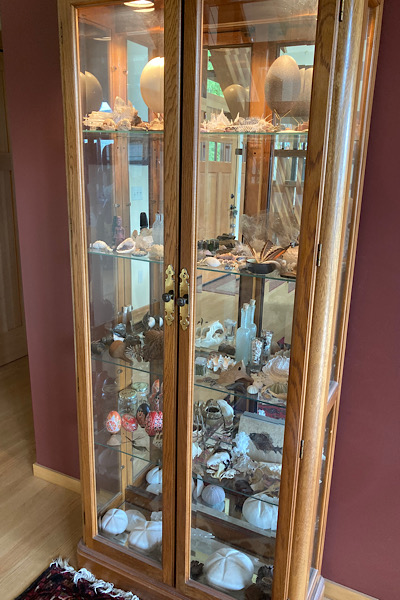
One of the items in the cabinet is this salt crystal.
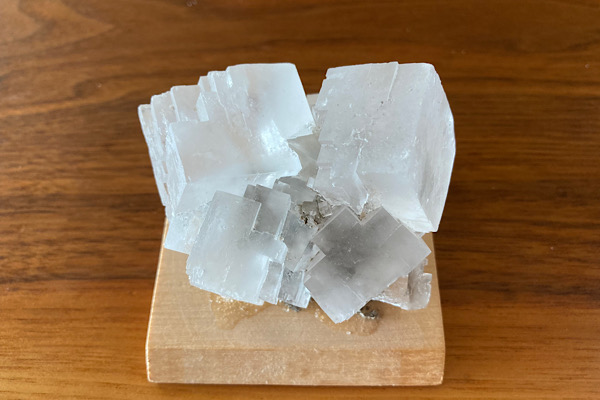
It is from the Wieliczka Salt Mine in Wieliczka, Poland, a UNESCO World Heritage site. In 2008, I visited Krakow Poland for a geology conference and during a break took a side trip to the nearby town of Wieliczka to visit the famous salt mine there. The mine is over a thousand feet deep and was in operation from the late 13th century until 1996. Salt was a valuable commodity in the Middle Ages. Roman soldiers often took their pay in salt rather than coin. The word “salary” is derived from “sal”, the Roman word for salt. And, of course, it is a compliment to be referred to as the “salt of the earth.” The discovery of mineable salt made Poland a rich country, much as finding a giant oil field on your property would make you rich today.
We need a geological sidebar to explain the origin of salt deposits. Anyone can evaporate some sea water and get a little salt, but a thick mineable salt deposit requires special conditions. You need a deep enclosed basin connected to the sea by a narrow waterway with a shallow or silled entrance. And it needs to be in an arid climate.
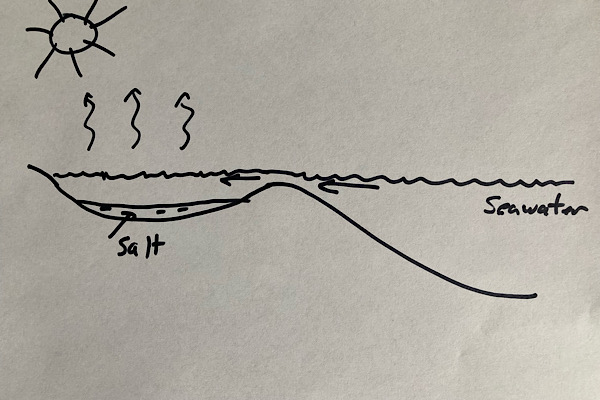
As you can see in the image above, fresh seawater enters the basin over the silled entrance, where it is subjected to evaporation and becomes denser. This dense, briny water cannot escape and eventually crystallizes into a salt layer on the floor of the basin. If there is subsidence in the floor of the basin, the salt deposit gets thicker, often thousands of feet thick. This occurred in the Gulf of Mexico about 150 million of years ago and in present day Poland about 13 million years ago.
Now back to the mine tour. When you enter the mine, it looks like a typical mine: shafts, tunnels, railway cars for carrying salt.
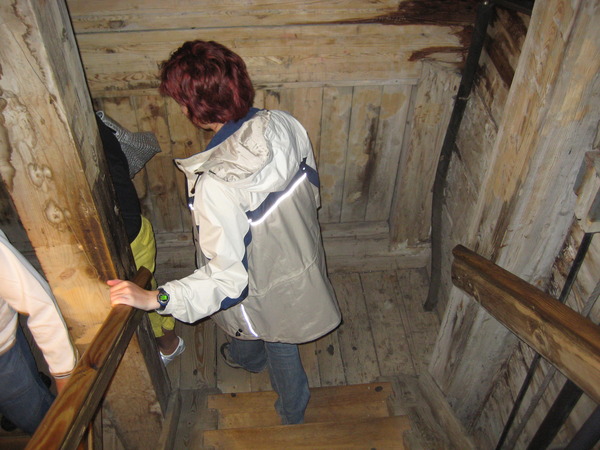
Entering the mine.
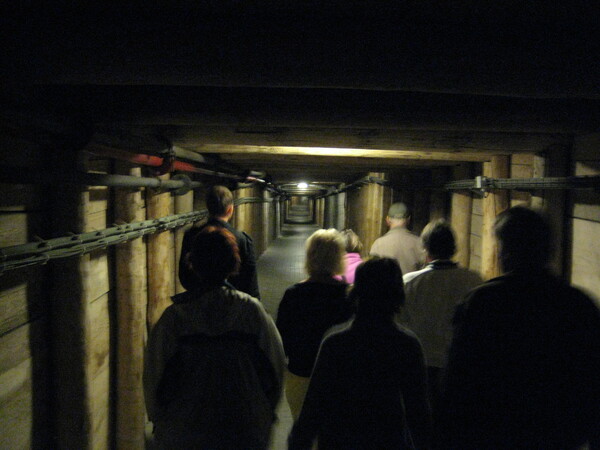
Long tunnel.
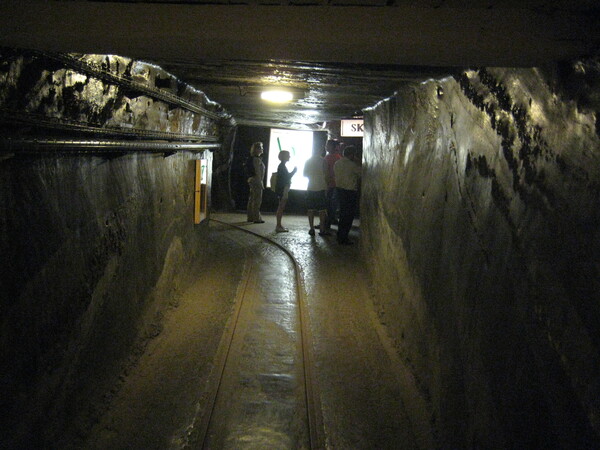
Getting into the salt. The walls, ceiling and floor are all solid salt. Note the tracks for rail cars.
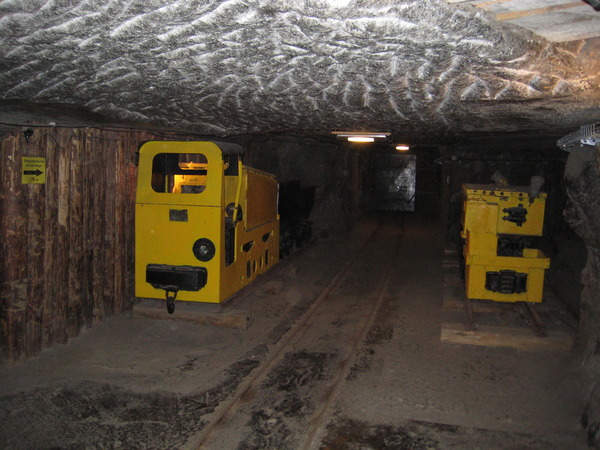
Rail cars for hauling salt. Low ceiling, watch your head!
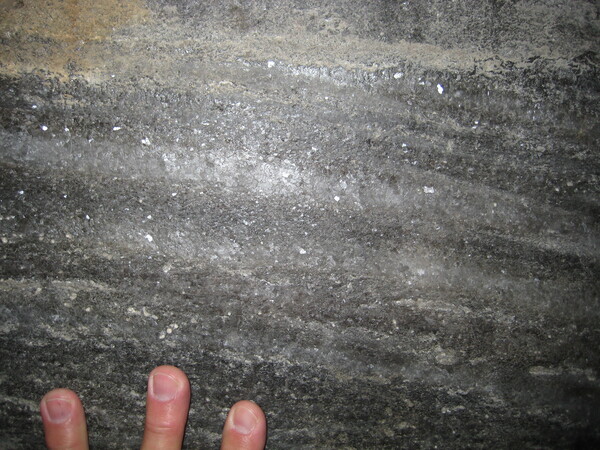
This is what salt looks like in a salt mine. Note the layers resulting from millions of salty depositional events.
So far it is everything you expect to see in a mine. Tight tunnels, rail cars, a real working-mine vibe. Then you come to a room and see this:
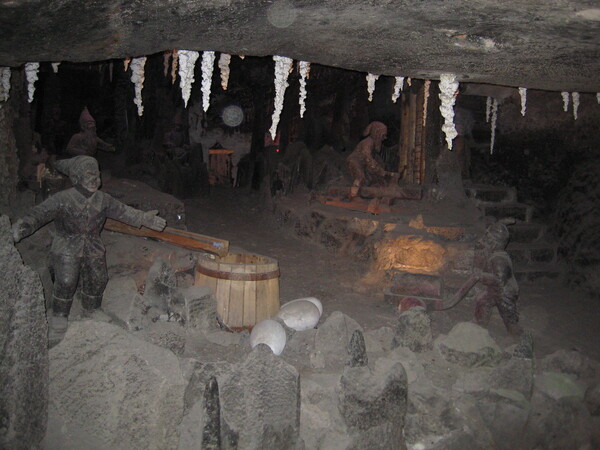
Happy dwarves and eggs (?) all carved out of salt. In another room you see this:
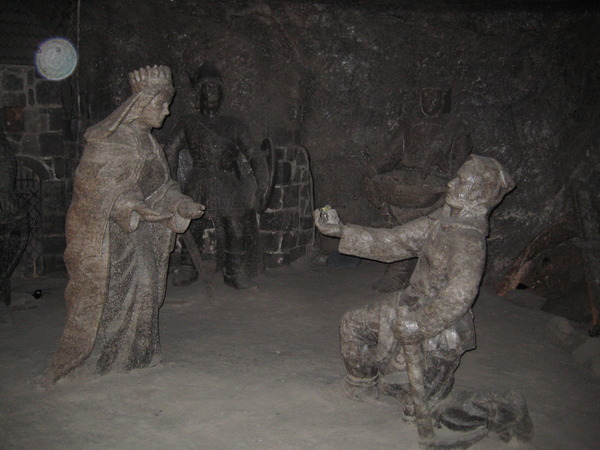
A life-size sculpture of a salt miner presenting a gift of salt to a visiting queen. Behind them are knights. All carved out of pure salt. In fact, the mine is riddled with sculptures and carvings of famous people, not so famous people, and notable events. As if that wasn’t enough, you then enter this:
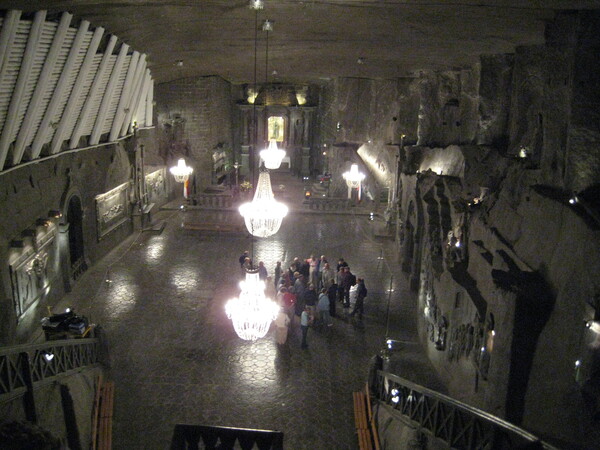
A salt chapel!
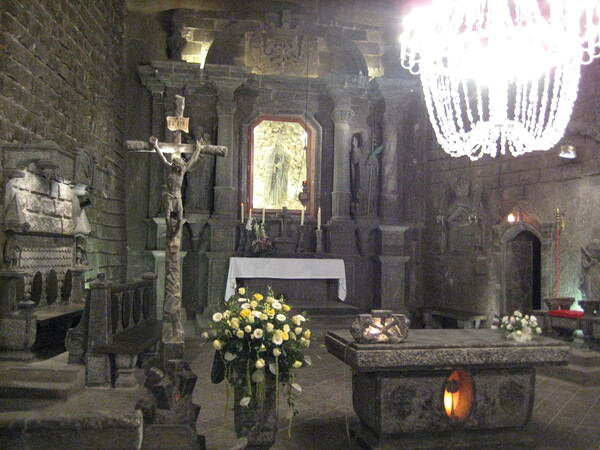
Everything you see is carved out of salt.
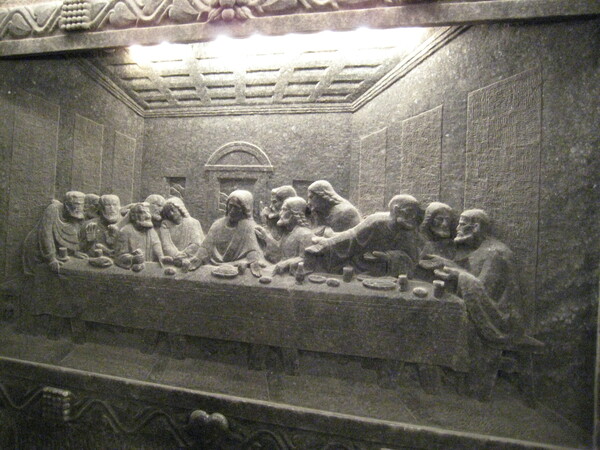
The Last Supper.
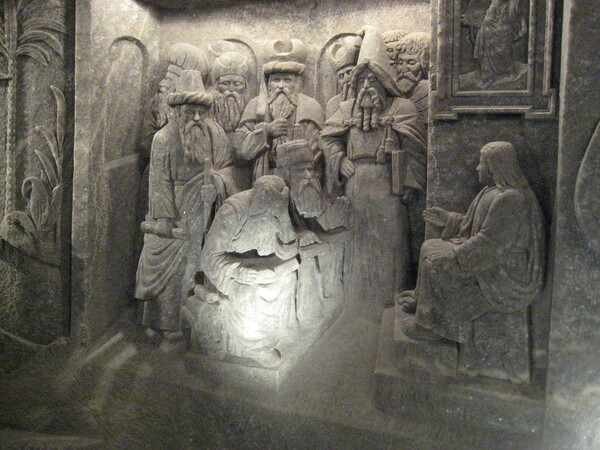
A bunch of serious looking people.
And finally, you get to the brine pool. A pool of salt brine so dense that you cannot sink in it.
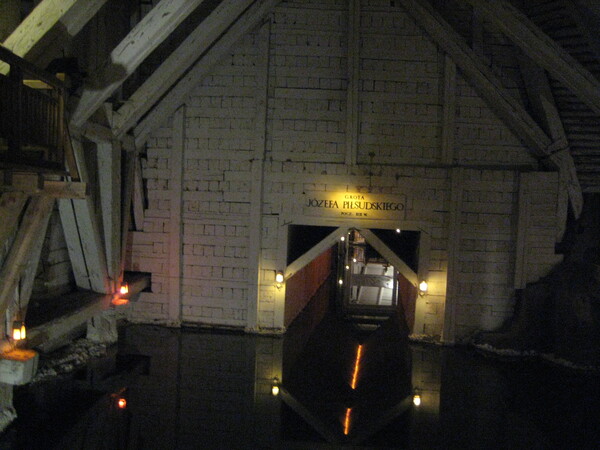
During World War 2, some Nazi soldiers tried to take a boat ride on the pool. The boat capsized (probably because the water was so dense the boat could not sink to a stable depth), trapping the soldiers inside. They were unable to dive deep enough into the water to escape, and they drowned inside the overturned boat.
Well, just when you think you have seen it all, there is:
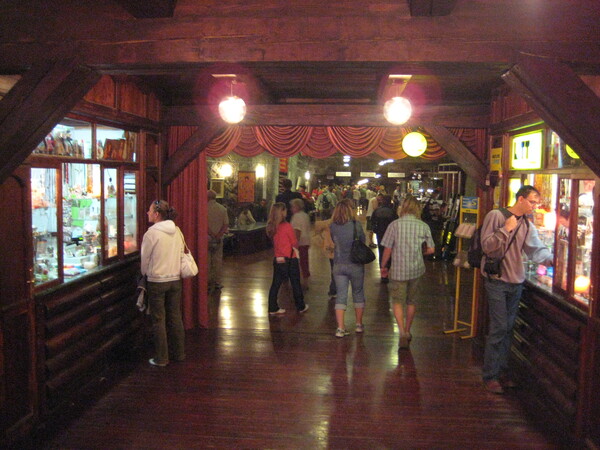
The Mall! I mean any mine worth its salt (sorry!) needs a mall…
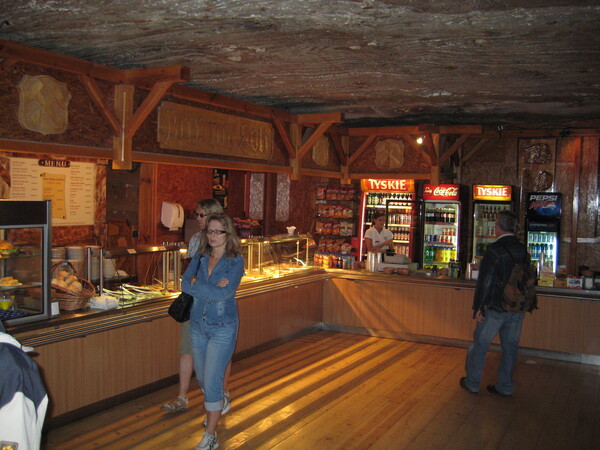
…with food courts…
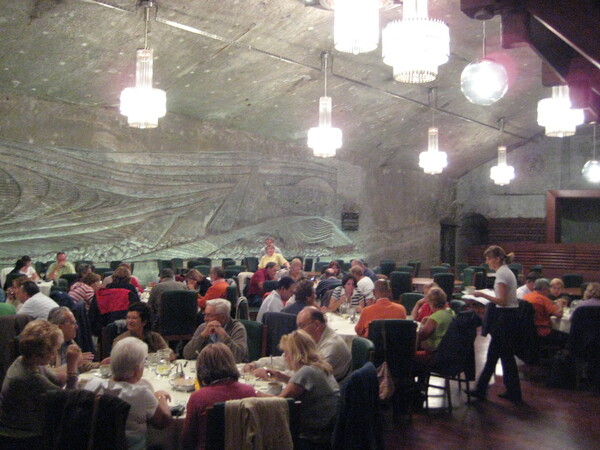
…and a restaurant. All hundreds of feet beneath the surface.
Well, that’s the tour. I hope you enjoyed it.
Indeed! Thank you for the tour, Thor.
*****
You will find The Rambling Writer’s blog posts here every Saturday. Sara’s Book View Cafe Greek islands novel is available in print and ebook: The Ariadne Connection. “Technology triggers a deadly new plague. Can a healer find the cure?” The novel has received the Chanticleer Global Thriller Grand Prize and the Cygnus Award for Speculative Fiction. Sara is back at work on the sequel, The Ariadne Disconnect. Sign up for her quarterly email newsletter at www.sarastamey.com