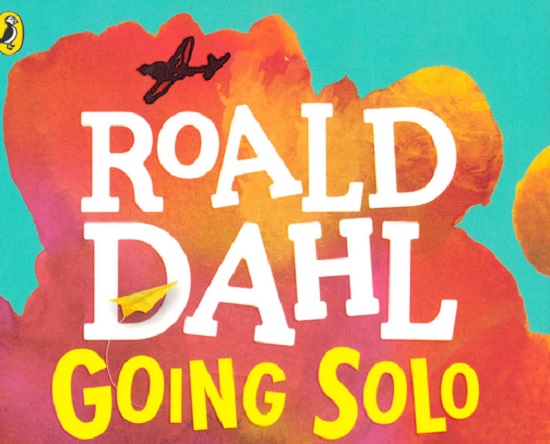
The fascinating second volume of Roald Dahl’s autobiography takes you along on his early work in Africa and then enlistment as RAF fighter pilot in World War II.
Shortly before Memorial Day this year, Thor happened upon Going Solo in a local bookstore, and insisted that I read it, too. A terrific tale! I hadn’t actually read any of the author’s books, but had enjoyed the sardonic humor and creativity of movies based on his writing, such as “The Fantastic Mr. Fox,” “The Witches,” and the first “Willy Wonka.”
This second memoir fascinated me immediately, with vivid descriptions of his first job working for an oil company in Tanzania before WWII. In addition to a revealing portrait of British colonialism in Africa, the book follows intrepid Dahl on road trips through untamed country and hair-raising encounters with a lion and two deadly mamba snakes, among other adventures. His writing style is straightforward and unadorned, but full of terrific detail and understated social commentary.
When WWII breaks out, Dahl enlists for training as a fighter pilot, which he is told he isn’t fit for, as too tall at six and a half feet. He manages to squish into the nimble little training planes, and revels in flying. Then reality hits, as he’s assigned to fly a larger fighter plane (for which he’s never given training) to a location for which he’s given the wrong coordinates. When he runs out of fuel, lost above a wilderness as dark descends, he crash-lands and ends up for five months recuperating in a hospital, possibly permanently blind. Here’s where the famous British “stiff upper lip” proves apparently true, as the young Dahl seemingly accepts the situation without complaint.
He’s told, because of his severe concussion, that he won’t be flying again, but he recovers his sight and perseveres to be assigned to an RAF squadron on Greece, where the Germans are invading. What is revealed there is the sickening lack of preparation on the part of the British, assigning just seven fighter pilots and their scarce planes to hold back hundreds of better-equipped Germans invading. Predictably, only two of the pilots – including Dahl and one other – survive to fly to the next assignment in the Middle East. He doesn’t need elaborate language to underline his comment on the terrible loss of young lives through ignorance and arrogance of higher officers who make terrible decisions despite efforts of those actually on the ground to update the higher-ups’ information.
Again, Dahl is understated in describing the many dogfights he manages to survive, despite his planes being nearly demolished in action, sometimes flying as many as five missions in one day. Somehow his matter-of-fact descriptions of the violence and loss of life come through as more harrowing in his calm presentation. The insanity of war comes through all too clearly. His survival was truly a miracle.
The book is grounded with black and white snapshots that Dahl took before his camera was stolen while he was flying, further glimpses of a world now vanished.
*****
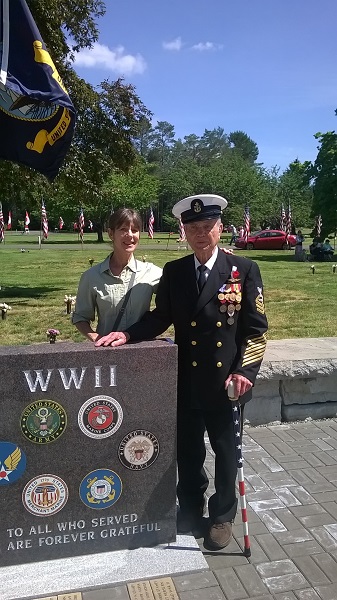
Reading the book as our local cemetery was preparing for its annual Memorial Day ceremony honoring fallen service members seemed particularly resonant, especially as the latest senseless war drags on with its chaos, destruction, and death. Every year for several years, I would accompany my veteran dad Neil (WWII and Korean War) to the “Festival of Flags.” A sobering reminder of the cost of wars, as well as the heroism of those who serve.
*****
You will find The Rambling Writer’s blog posts here every Saturday. Sara’s Caribbean suspense novel from Book View Café is ISLANDS, which draws on her experiences working as a scuba divemaster on various islands, and also her research into petroglyphs. Her years with her former partner, a wounded combat veteran from the Vietnam War, informed the novel’s PTSD-affected character of Vic. Sign up for her quarterly email newsletter at www.sarastamey.com