
In which Thor takes another turn to explore our cabinet of curiosities, this time selenite and adamite crystals gleaned on a geology adventure in remote Mexico.
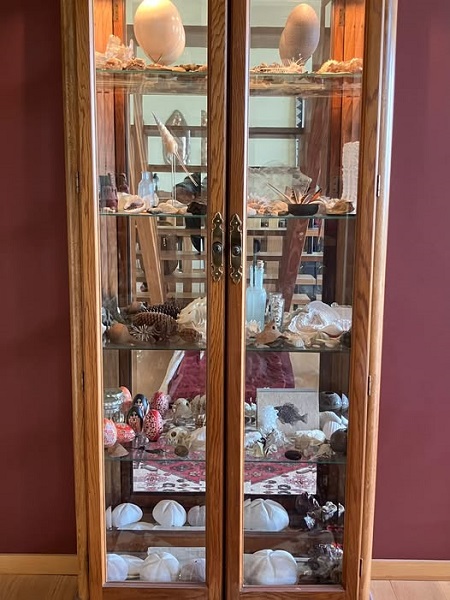
Thor is taking up the slack as I recover from the latest round of cancer treatments (my hero!), so here we go on one of his adventures years before we met. Like typical philosopher/scientists of the 19th century, we have a curio cabinet, full of specimens, travel mementos, and stories. Next time, I’ll take a turn with treasure from diving on a sunken ship in the Caribbean. Meanwhile, take it away, Thor! (In the following photos, he’s the tall guy.)
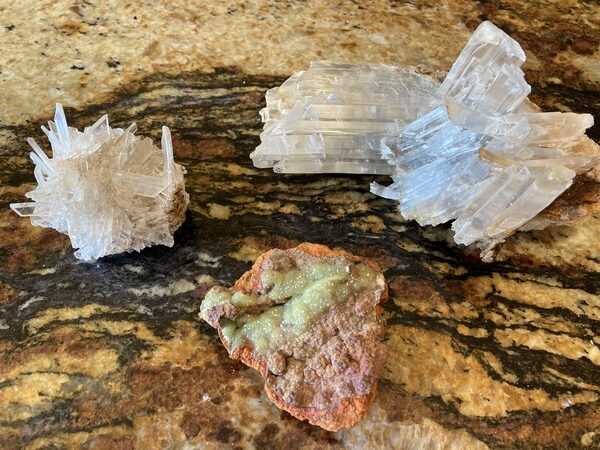
In the second of my Curio Cabinet blogs, I want to focus on more minerals. Below are pictures of selenite (the crystal form of gypsum) and adamite. The two clear crystals are selenite, and the green one is adamite.
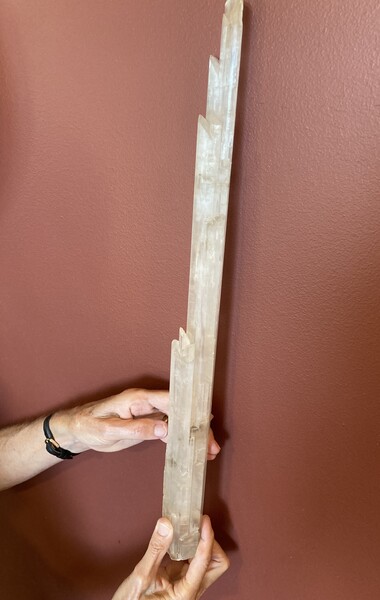
Here is a picture of our selenite “sword.”
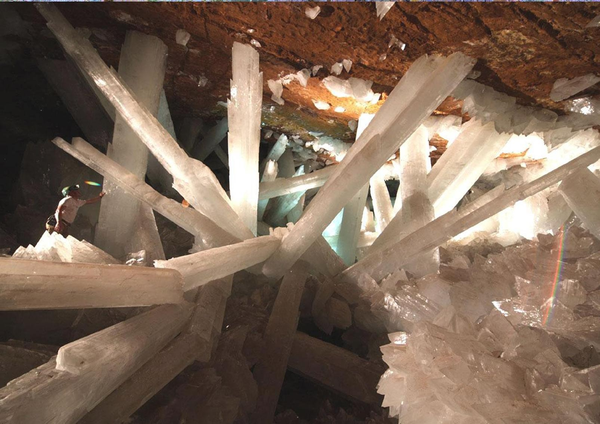
In the Naica mine in Mexico, these crystals have grown as large as trees. In the image below, you can see a person standing on one of these selenite crystals in the Naica mine (no, this is not photoshopped or AI).
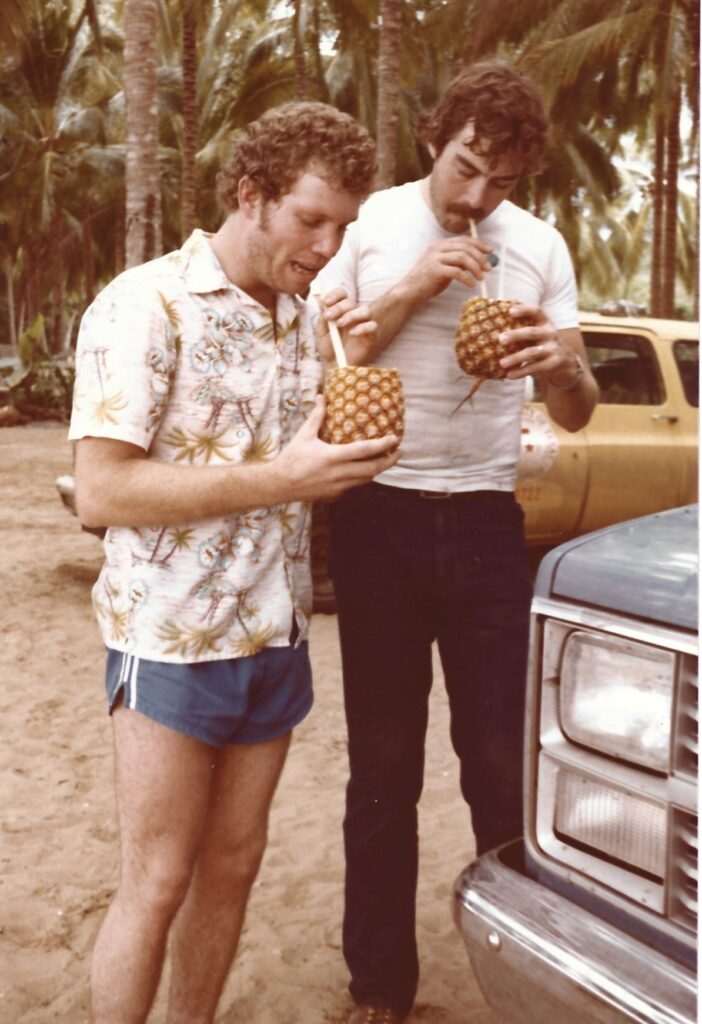
Here is the tale of how I acquired these crystals: In the early 80’s, I taught in the Geology Department at the University of Texas in Austin, where I was an assistant professor and the faculty sponsor of the student geology club. During winter break, we would take a two-week field trip through Mexico, traveling down the east coast, across the central plateau, up the west coast, and then back across the plateau and up the coast to home. We camped and ate fruit purchased from roadside stands.
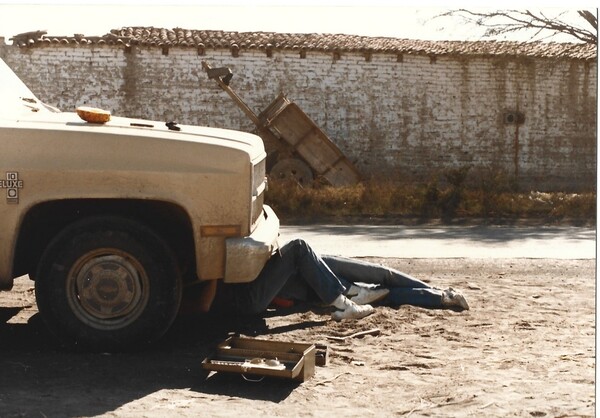
We broke down.
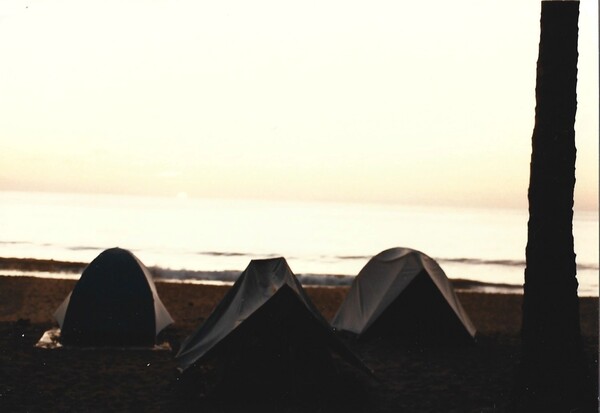
We visited caves, extinct volcanoes, and whenever the opportunity arose, beaches.
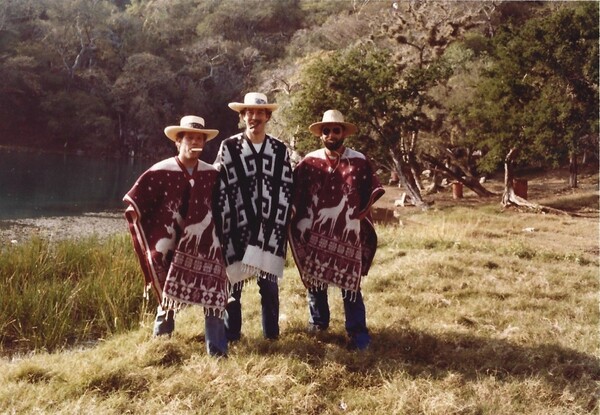
And we tried not to stand out as gawky tourists.
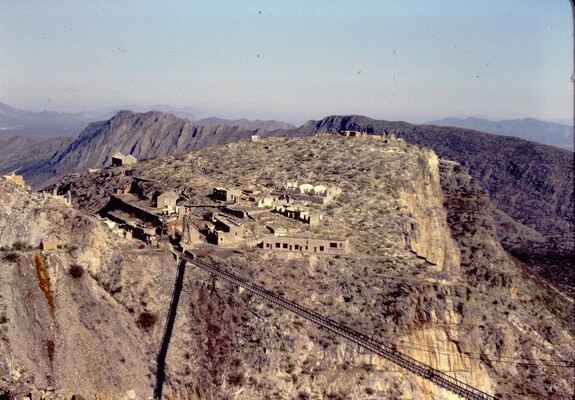
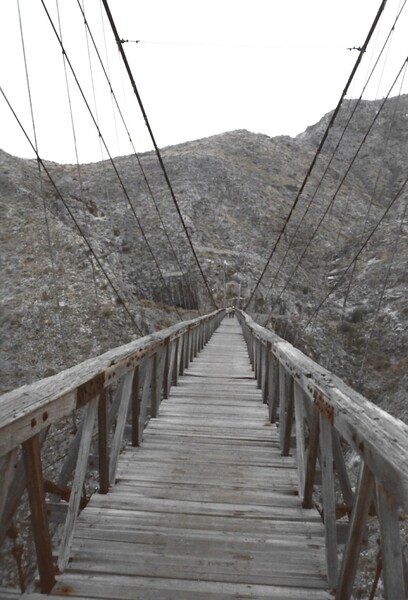
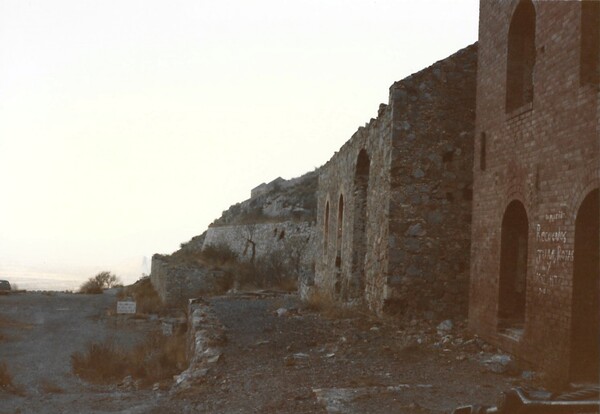
One notable stop was the La Ojuela Mine on the plateau in north central Mexico. The mine has been in operation since 1598, and it taps into one of the largest silver-lead-gold deposits in Mexico. The countryside is dotted with abandoned towns and mine entrances. The most spectacular ruin is found at the end of a long, single-lane road carved out of a mountainside. At the end of the road is an eerie scene: Pueblo de Ojuela, a town built of stone and completely uninhabited. Pueblo de Ojuela once held 2,000 miners and their families and included a school, hospital, and movie theater. Its most spectacular feature is an extremely long cable suspension bridge that connects the town with the mine entrance on the other side of a deep valley. When this particular mine entrance was abandoned, the town was abandoned.
View of suspension bridge and ghost town:
On the bridge:
Inside the ghost town:
Now the miners live in Mapimi, four miles away on the desert floor. Mapimi was our real destination. But silver and gold were not what drew us. We wanted the economically useless but beautiful minerals associated with these deposits: selenite with its clear, sword-like blades, and sparkling green adamite.
I don’t know what Mapimi looks like now, but in 1984 it was a small, dirt-street town with donkey carts and oxen pulling loads of sticks.
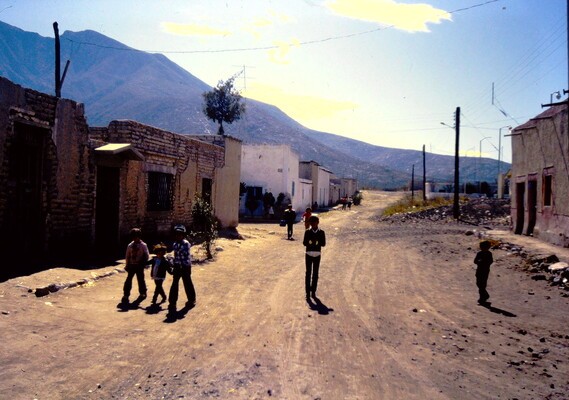
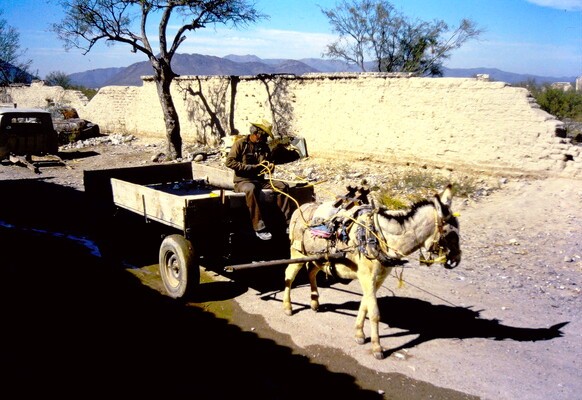
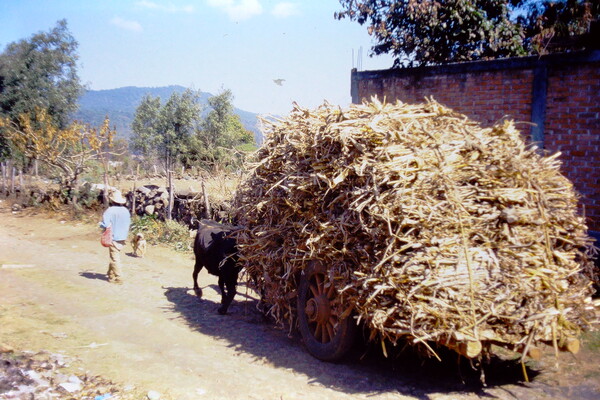
Besides the ruin of Pueblo de Ojuela, there is nothing to see here, and tourists are rare. The only real draw is the mineral trade. Many of the men in Mapimi work in the mine, and in their daily search for ore, they come upon pockets and veins of minerals like selenite and adamite. It is illegal for them to remove and sell the minerals, so they smuggle them out of the mine and take them home. The miners don’t advertise their mineral specimens, and you don’t go to a shop to buy them. The miners find you.
We arrived in Mapimi in our Chevy Suburbans, emblazoned with the University of Texas logo, and parked in the town square.
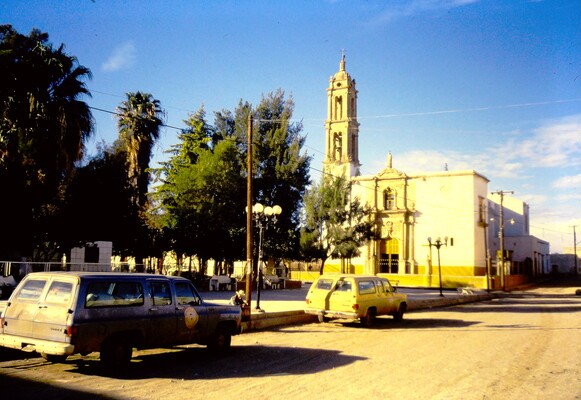
Any outsider draws attention, and the doorways of the houses filled with adults and wide-eyed children peering at us.
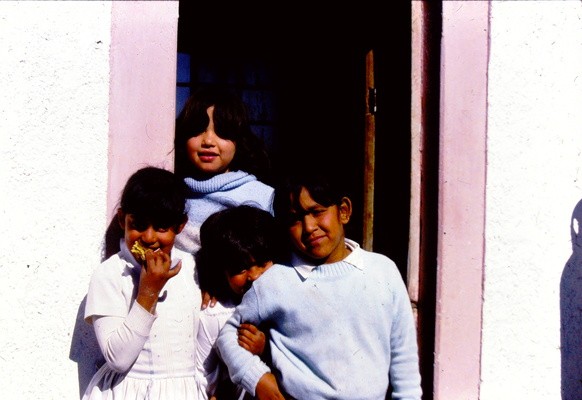
We got out of our vehicles, bought Cokes at a street stand, and just stood around. After about 5 minutes we were approached by a gray-haired man with a large knife on a rope belt….
To Be Continued….
Thanks, Thor! I’ll be waiting with bated breath for next week.
*****
You will find The Rambling Writer’s blog posts here every Saturday. Sara’s Book View Cafe Greek islands novel is available in print and ebook: The Ariadne Connection. “Technology triggers a deadly new plague. Can a healer find the cure?” The novel has received the Chanticleer Global Thriller Grand Prize and the Cygnus Award for Speculative Fiction. Sara is back at work on the sequel, The Ariadne Disconnect. Sign up for her quarterly email newsletter at www.sarastamey.com